
Creating an accessible home-based cardiac rehab service.
Service Design, Experience Design, Healthcare DesignSeptember 2020 - December 2021
My Responsibilities: Problem space identification, creating user interview guide, creating interactive app prototype, competitive landscape research
Deliverables: Process map, journey map, Figma prototype, business plan, pitch deck
Overview
As part of a two-quarter long medical entrepreneurship class, I was a member of an interdisciplinary team of students from Northwestern’s graduate schools. We identified stakeholder needs across a wide variety of problem spaces, and developed a solution which we pitched to investors. We created a service model and minimum viable prototype for a home based cardiac rehab service. As the only designer on the team, I created the entire app prototype, in addition to designing all of our visual assets (story boards, slide decks, logo, etc.).
We spent a few months after completing our project applying to different entrepreneurship funding competitions, but ultimately moved away from that as the members of our group each go individually busy with other work and school commitments.
Opportunity
Existing cardiac rehab (CR) programs are not easily accessible to working adults due to scheduling and transportation constraints. Potential patients have the mistaken perception that CR is a service strictly for the geriatric population.
Currently only:
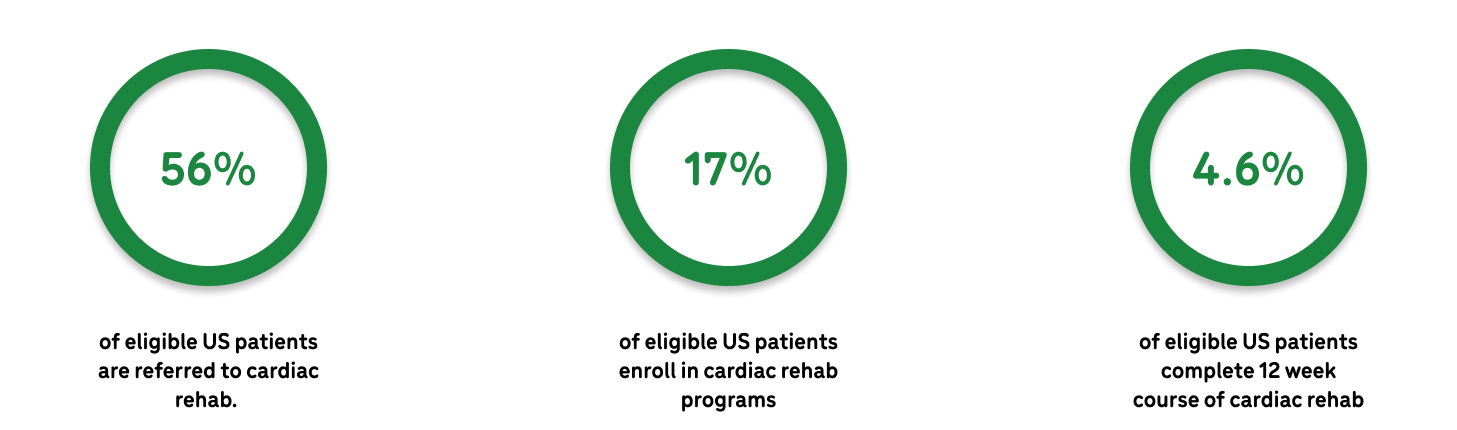
After seeing the major gaps in sucess of cardiac rehab programs, combined with the added use of telehealth on the heels of the COVID pandemic, we identified an opportunity to create a home based cardiac rehab service.
Process

Problem Space IdentificationEach team member spoke with medical professionals to source initial ideas. We conducted market research and literature reviews of potential problem spaces. After extensive conversation, we narrowed down our list to four promising ideas.
After interviewing industry experts including insurance executives, clinicians, and medical startup entrepreneurs, we mapped our ideas in a matrix and compared across key metrics of success for our project. We decided to focus on creating a home-based cardiac rehab service.

Problem Space ExplorationAfter focusing on home based cardiac rehab, we began exploring the problem space by researching existing options in industry and speaking with cardiologists and SMEs to understand the existing care models, and gaps that exist. We interviewed them to hear their perspectives on the issues that contribute to the disappointing rates of patient completion of cardiac rehab programs, as well as begin brainstorming solutions.
We synthesized this research into an overarching story board which illustrates the common cycle many patients fall into of reverting back to unhealthy habits when returning to their homes, increasing chance of re-admission to inpatient care.

Preliminary PrototypesAfter synthesizing what we learned from this problem space exploration, we created a preliminary prototype of what our service could look like. We created a patient journey map depicting the interaction between the patients and the service.

We then created a storyboard to give more emotion to these interactions, to be used as a reference when interviewing stakeholders to give them a good sense of what our service might look like.
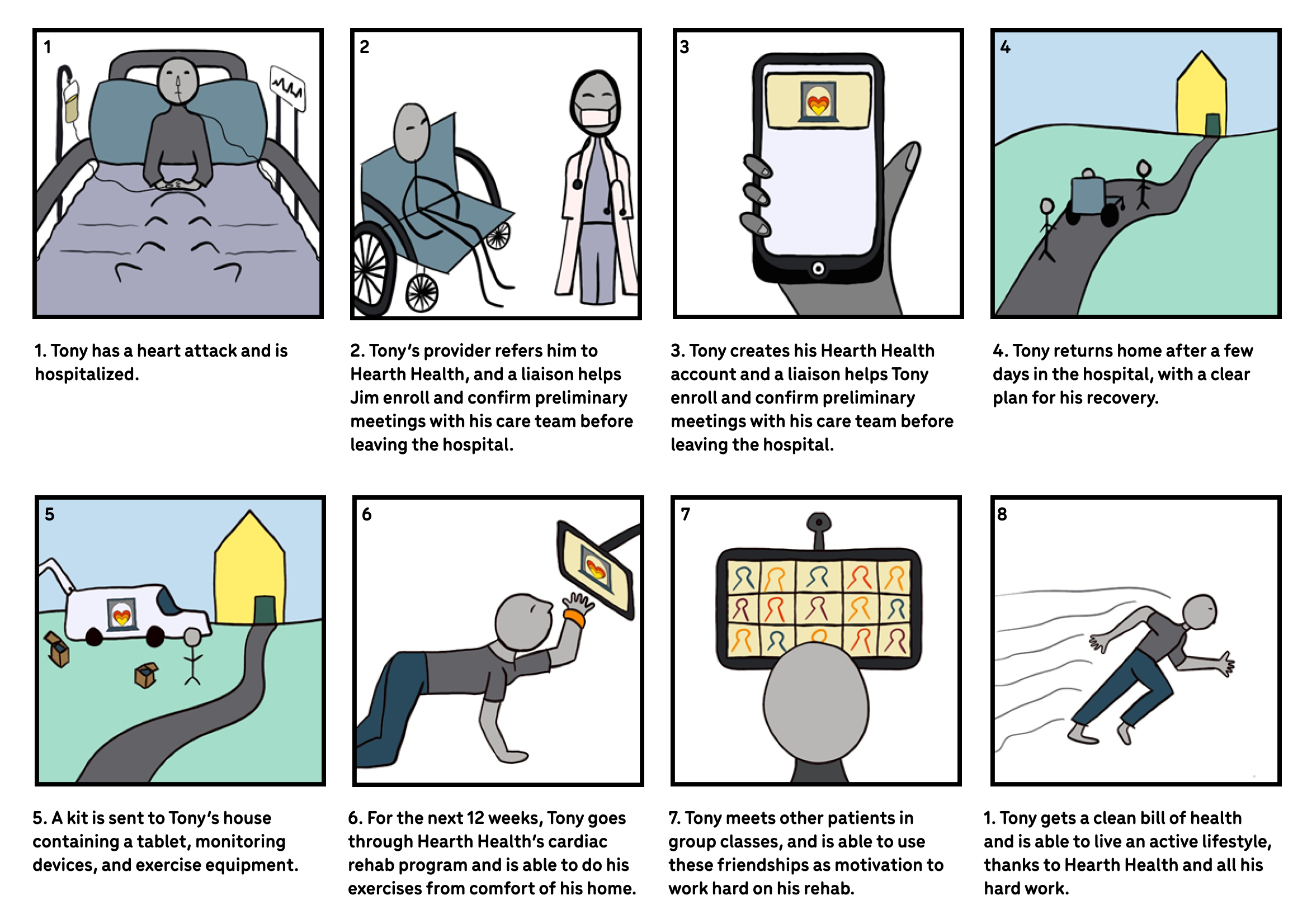
Stakeholder InterviewsWe conducted over 30 in depth stakeholder interviews with eligible patients (both those who enrolled and completed CR and those who never enrolled), cardiologists and other relevant clinicians, and insurance providers. The purpose of these interviews was to gain insight into the reasons for lack of enrollment in cardiac rehab, and gauge interest in our service.
Minimum Viable PrototypeWe began creating a minimum viable prototype (MVP) of the patient facing application aspect of our service and developed a business model and financial forecasting. We presented the MVP and business model to industry experts to assess its viability and identify areas for improvement.
As the only designer on the team I managed the creation of MVP. I created an app network map, wireframed each screen, created a design system, and created all screens in Figma.

After deciding which screens we were creating for the MVP, created a wireframe reference document for my teammates who were helping with the MVP. This document had a rough sketch wireframe of each screen.

From there, we began creating a clickable prototype in Figma. I had to adjust my UX design process to allow for collaboration between team members with very limited design experience, meaning this was a valuable exercise in project management.
Key features of the MVP included:
Virtual Appointing
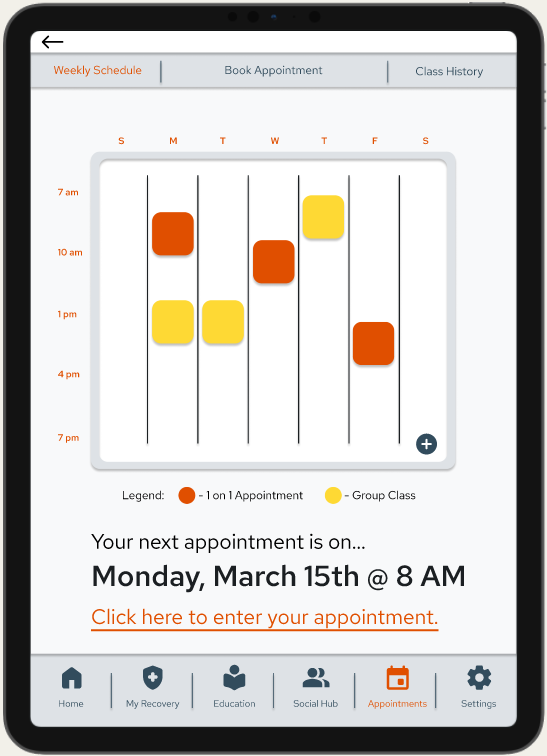
Patients can book virtual appointments with their providers and join video visits through the app. They can schedule 1:1 visits, as well as join a range of different group classes which happen daily.
There is live synching with their wearable biometric monitoring displayed in app so patients and clinicians can know how hard to push to pursue growth while staying safe.
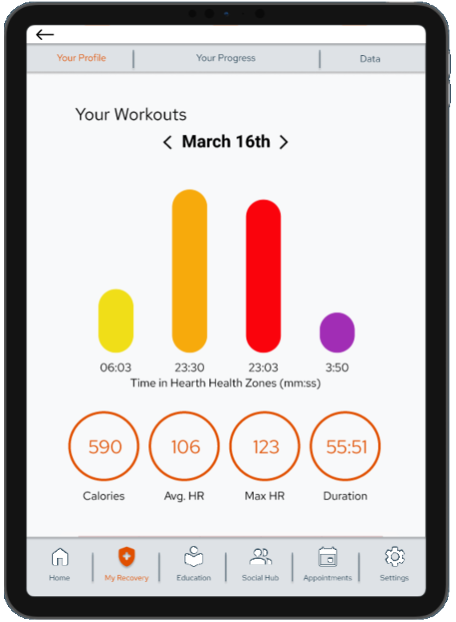
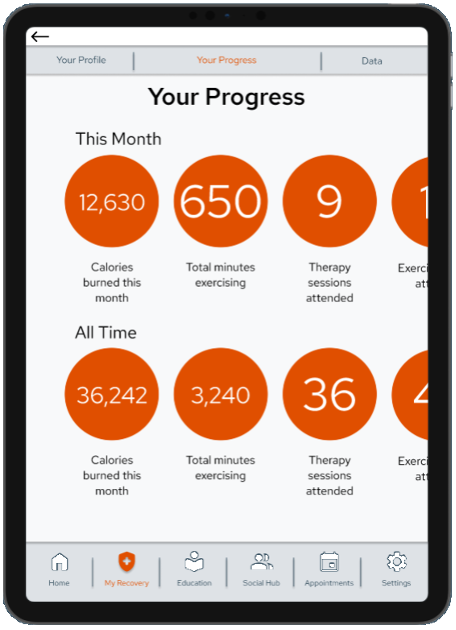
Patients can track their progress through Hearth Health, seeing their exercise time in different exertion levels as part of post workout reports.
They can view their long term health and exercise progress over time, as well as their daily heart health and activity data.



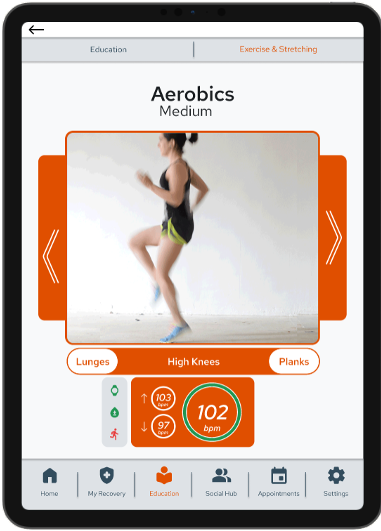

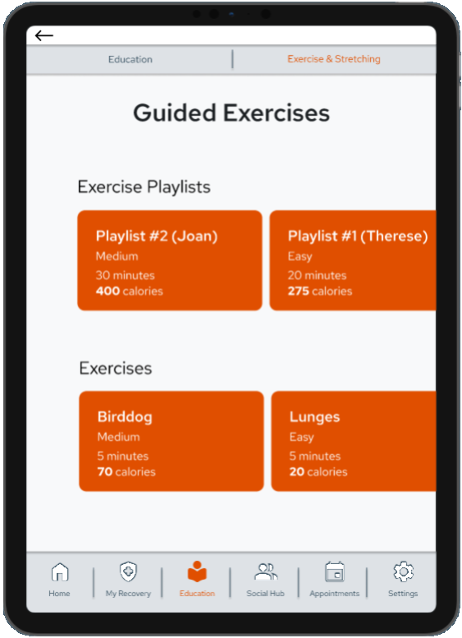
Patients can complete home exercises on their own, using curated playlists with voice overs from specific Hearth Health instructors. These exercise playlists include instructional videos in addition to live biometric tracking.
Hearth Health app can call emergency services if members biometric data necessitates.
Independent Exercises & Playlists
Data Monitoring & Progress Tracking
Impact
After finishing our class, the team filed as a business entity and applied to a couple funding competitions to begin the stages of starting as a startup. Ultimately, we decided not to pursue this after a few applications, as we all got busy with school and new jobs.
We had identified next steps as partnering with a medical research institution to do clinical trials, after completing a second round of user research to further refine the user application for the trial.